
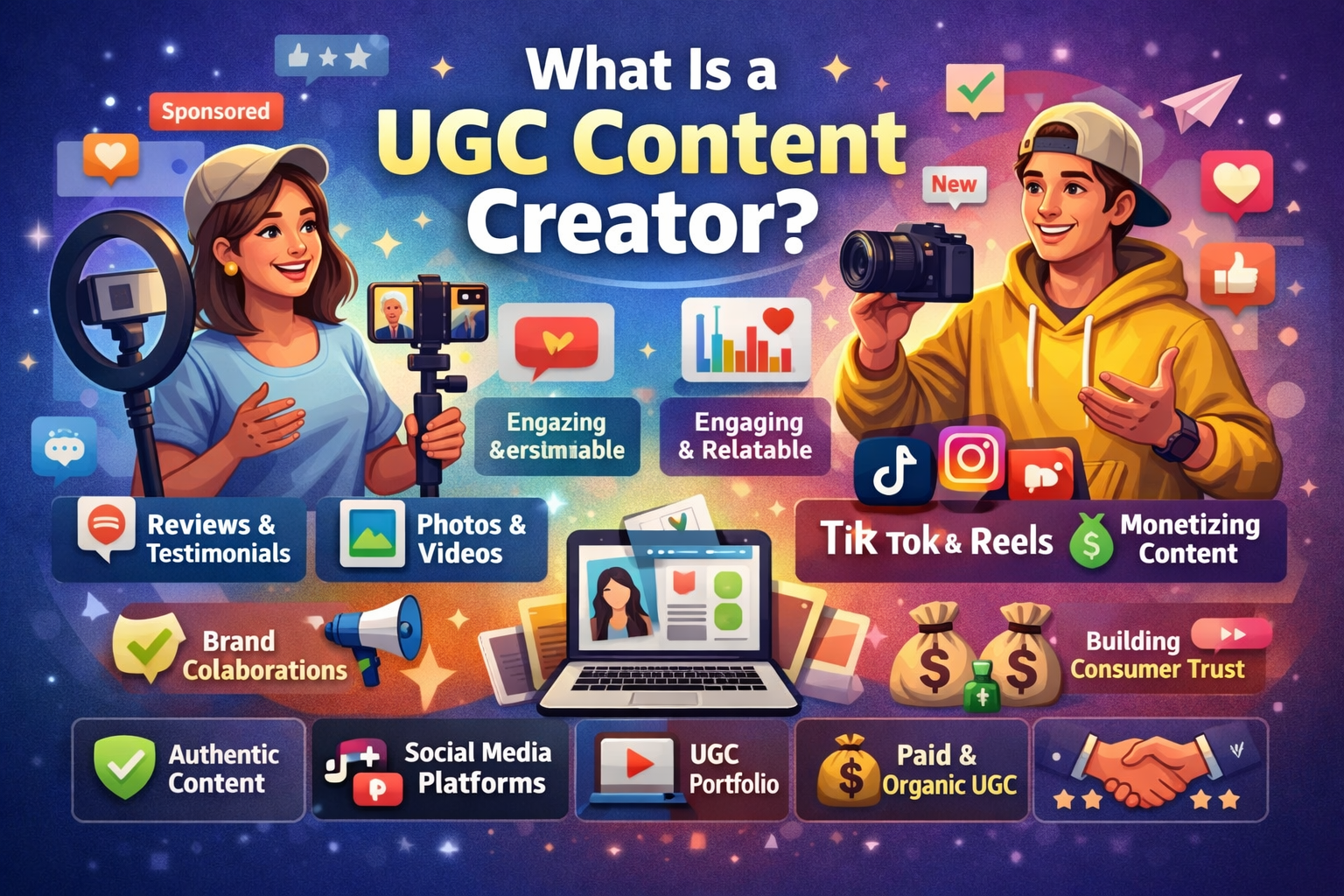
Are you want to know What Is a UGC Content Creator?
Why UGC Content Creators Matter More Than Ever
Scroll through TikTok videos or Instagram Reels, and you’ll notice something interesting. The ads that stop your thumb aren’t always glossy, studio-shot commercials.
Instead, it’s often a regular person talking to the camera, sharing an honest experience, showing a product in daily life, or reviewing a service in a relatable way.
That creator is likely a UGC content creator.
A UGC content creator specializes in producing user-generated content (UGC) for brands—content that feels authentic, natural, and trustworthy rather than overly promotional. In a digital landscape where audiences are overwhelmed with ads, relatable content has become the most powerful currency.
Brands are no longer just chasing reach. They’re chasing consumer trust, social proof, and genuine connection. That’s why UGC has moved from a “nice-to-have” marketing tactic to a core UGC marketing strategy across industries.
In this guide, we’ll break down exactly what a UGC content creator is, how this role fits into the creator economy, how it differs from influencer marketing, how creators get paid, and why UGC is reshaping modern brand messaging.
1. What Is a UGC Content Creator?
At its core, a UGC content creator is someone who creates content for brands, not for followers.
Unlike influencers, UGC creators don’t need a massive audience. Instead, they focus on producing high-quality UGC formats (photos, reviews, testimonials) and videos that brands can use across their own social media platforms, websites, ads, and email campaigns.
Key Characteristics of a UGC Content Creator
A UGC creator typically:
-
Produces short-form video content designed for ads and organic posts
-
Focuses on user experience/content relatability
-
Aligns content with brand goals, not personal branding
-
Works through brand partnerships / brand collaborations
-
Understands platform algorithms / discovery signals
-
Delivers content optimized for content engagement optimization
In other words, UGC creators act as the voice of the customer.
2. UGC vs Influencer Marketing: What’s the Real Difference?
One of the most common questions brands and beginners ask is about UGC vs influencer marketing.
UGC Authenticity vs Influencer Content
Influencer marketing relies on reach and personal influence. UGC relies on authenticity and believability.
| Aspect | UGC Content Creator | Influencer |
|---|---|---|
| Audience size | Not required | Critical |
| Content ownership | Brand owns content | Influencer owns content |
| Focus | Relatability & trust | Personal brand |
| Cost | Usually lower | Often higher |
| Goal | Conversions & trust | Awareness & reach |
This distinction matters because audiences today are highly ad-aware. They respond better to content that feels like a recommendation from a peer, which is why UGC authenticity vs. influencer content has become such a critical discussion in marketing.
3. Why Brands Are Investing Heavily in UGC
UGC isn’t a trend—it’s a structural shift.
3.1 Consumer Trust and Social Proof
Modern buyers trust people more than logos. Social proof—reviews, testimonials, and real experiences—directly impacts purchasing decisions. UGC acts as scalable word-of-mouth marketing.
3.2 Brand Awareness via UGC
When brands reuse UGC across ads, landing pages, and email campaigns, they amplify brand awareness via UGC while maintaining authenticity.
3.3 Native Advertising That Doesn’t Feel Like Ads
UGC works exceptionally well as native advertising. On platforms like TikTok and Instagram, UGC blends seamlessly into feeds, reducing ad fatigue and improving watch time.
4. Types of UGC Content and Formats
UGC creators work across multiple UGC formats, each serving different marketing objectives.
Common UGC Formats
-
Photos: Lifestyle shots, product-in-use visuals
-
Reviews: Honest first impressions and deep dives
-
Testimonials: Experience-driven storytelling
-
Unboxing videos
-
Problem–solution demos
-
Before-and-after transformations
Each format supports a different stage of the buyer journey, from awareness to conversion.
5. Platforms Where UGC Performs Best
UGC thrives where authenticity is rewarded.
Social Media Platforms That Love UGC
-
TikTok videos: Highest engagement and discovery potential
-
Instagram Reels: Strong for brand storytelling and conversions
-
YouTube Shorts
-
Facebook Ads
-
Brand websites and landing pages
Understanding platform algorithms / discovery signals—like watch time, retention, and interaction—is critical for UGC success.
6. Skills Every Successful UGC Content Creator Needs
Being a UGC creator is not just about recording videos. It’s about strategy and execution.
Essential Content Creation Skills
-
Storytelling
Turning everyday experiences into compelling narratives. -
Video Editing
Fast cuts, captions, hooks, and pacing optimized for short attention spans. -
Photography in UGC
Natural lighting, real environments, and product realism. -
Understanding UGC quality standards
Clear audio, stable framing, strong hooks, and platform-specific formats. -
Analytical thinking
Interpreting engagement metrics like CTR, watch time, and saves.
7. Paid UGC vs Organic UGC: What’s the Difference?
Organic UGC
-
Created voluntarily by customers
-
Used mainly for community building
-
Harder to scale
Paid UGC
-
Commissioned content
-
Controlled messaging
-
Aligned with content strategy
-
Clear deliverables and usage rights
Most brands rely on paid UGC vs. organic UGC for predictable results.
8. UGC Workflow: From Brief to Delivery
Professional UGC creators follow a structured UGC workflow:
-
Brand brief and objectives
-
Understanding the target audience
-
Concept and script development
-
Content production
-
Editing and optimization
-
Review and revisions
-
Final delivery
This workflow ensures consistency and performance.
9. UGC Portfolios and Creator Marketplaces
Building a Strong UGC Portfolio
A UGC portfolio should showcase:
-
Different formats
-
Multiple niches
-
Real-world use cases
-
Performance insights when possible
Finding Work Through Creator Marketplaces
Many creators land work via creator marketplaces, which connect brands with vetted creators. These platforms streamline collaboration and payments.
10. UGC Content Rights, Licensing, and Compensation Models
UGC Content Rights/Licensing
UGC creators must understand:
-
Usage duration
-
Paid media rights
-
Whitelisting permissions
-
Exclusivity clauses
Ignoring UGC content rights/licensing can lead to underpricing or legal issues.
UGC Compensation Models
Common UGC compensation models include:
-
Flat fee per asset
-
Bundle pricing
-
Monthly retainers
-
Performance bonuses
This ties directly into content monetization strategies.
11. UGC Creator Demographics and Job Opportunities
UGC creators often fall into nano and micro creator categories. Brands prefer them because they feel more relatable.
UGC Job Opportunities
Opportunities include:
-
Freelance brand collaborations
-
Agency contracts
-
Long-term retainers
-
Creative strategy roles
As the creator economy grows, UGC roles are becoming more professionalized.
12. UGC Trends Shaping the Future
Key UGC trends include:
-
AI-assisted editing
-
Hyper-niche creators
-
Performance-based pricing
-
Data-driven content testing
-
Creator-led UGC campaign examples replacing traditional ads
Brands are also using UGC insights to refine content strategy and improve content engagement optimization.
13. Real-World UGC Campaign Examples
Successful brands use UGC to:
-
Increase conversions
-
Reduce ad costs
-
Improve retention
-
Strengthen brand voice
These UGC campaign examples prove that authenticity outperforms polish.
Conclusion: What Is a UGC Content Creator
A UGC content creator sits at the intersection of creativity, marketing, and authenticity. As brands move away from traditional ads and toward trust-driven marketing, UGC has become indispensable.
If you enjoy creating content, understanding audiences, and shaping real brand narratives—without needing influencer fame—UGC is one of the most sustainable opportunities in today’s digital landscape.
Final Thought:
UGC isn’t about going viral. It’s about being believable. And in modern marketing, believability wins.