
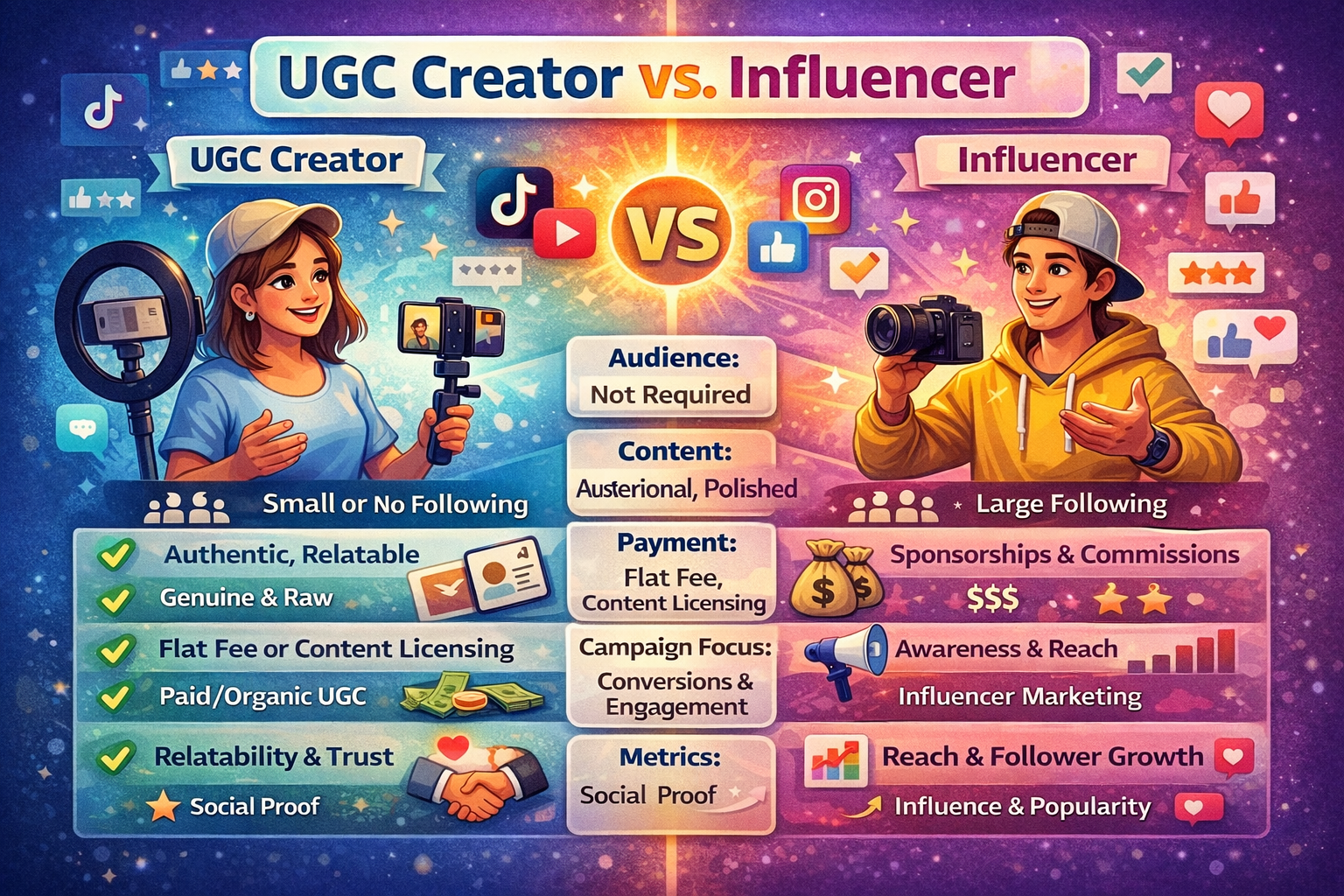
Are you curious to know UGC Creator vs. Influencer: Key Differences, than you are coming to right place.
Understanding the New Age of Digital Content
In today’s fast-evolving digital landscape, brands are no longer relying solely on traditional advertisements to connect with audiences. Consumers are increasingly drawn to content that feels authentic, relatable, and trustworthy.
This shift has brought two roles into the spotlight: UGC creators and influencers.
At first glance, these roles may appear similar—they both produce content, collaborate with brands, and leverage social media platforms like TikTok, Instagram, and YouTube.
However, the differences are substantial, and understanding them can dramatically affect a brand’s marketing outcomes.
UGC creators focus on creating user-generated content (UGC) for brands, prioritizing audience engagement and conversion-focused content, often without needing a massive personal following.
Influencers, on the other hand, use their personal brand and large audiences to drive reach, often as part of broader influencer campaigns.
With the rise of UGC campaigns and influencer marketing, brands now face an important strategic choice: when to leverage UGC authenticity and when to tap into the reach of influencers.
This guide will help you navigate that decision, exploring the roles, strategies, platforms, monetization models, and trends shaping the modern digital content ecosystem.
1. Defining the Roles: UGC Creators vs Influencers
Who is a UGC Creator?
A UGC creator produces content specifically for brands to use across marketing channels. Unlike traditional influencers, they do not necessarily rely on their own follower count.
Their value lies in creating authentic content that builds brand trust, drives engagement, and contributes to measurable business outcomes.
For example, imagine a small skincare brand launching a new serum. They hire a nano-influencer or UGC creator to shoot a video of themselves using the product at home.
This content can be repurposed on Instagram, TikTok, and even the brand’s website. The goal is not just views; it’s relatability, credibility, and social proof.
Key characteristics of UGC creators:
-
Focused on paid vs organic UGC campaigns
-
Works primarily with brands, not personal branding
-
Produces conversion-focused content
-
Leverages platform algorithms for visibility
-
Often operates within creator marketplaces to connect with brands
Who is an Influencer?
An influencer leverages their personal brand and audience to create impact. Influencers are central to influencer marketing campaigns and can range from micro-influencers (10k–100k followers) to celebrity influencers with millions of followers.
Influencers often:
-
Share content across their personal channels
-
Engage in influencer campaigns to maximize reach
-
Blend authentic content with branded promotions
-
Generate audience engagement through personality and style
-
Influence purchase decisions primarily through credibility and visibility
While influencers can create UGC, their content often emphasizes style and personal brand rather than the brand’s product alone.
2. Key Differences Between UGC and Influencer Content
Understanding the subtle differences between UGC creators and influencers helps brands allocate resources efficiently.
| Feature | UGC Creator | Influencer |
|---|---|---|
| Audience | Not required | Required |
| Content Style | Authentic, relatable | Polished, personal branding |
| Goal | Engagement, conversion | Awareness, reach |
| Platforms | Social media, brand channels | Primarily social media |
| Cost | Generally lower | Often higher |
| Campaign Type | UGC campaigns | Influencer campaigns |
Authenticity vs Reach
UGC authenticity is central to a UGC creator’s value. Their content feels like recommendations from peers rather than polished advertisements. Influencer marketing, by contrast, leverages reach and follower trust.
The distinction between reach vs relatability is crucial: a UGC creator may have fewer viewers but a higher likelihood of engagement and conversion.
Paid vs Organic UGC
Brands often utilize paid vs organic UGC strategies simultaneously. Paid UGC allows brands to control messaging, test content, and scale campaigns, while organic UGC emerges naturally from loyal customers, adding credibility and social proof.
Both forms complement each other and enhance the overall content strategy.
3. Content Formats and Strategies
UGC Formats and Engagement
UGC creators specialize in formats that drive audience engagement and conversion:
-
Photos: Real-life product usage
-
Reviews & testimonials: Honest opinions
-
Short-form video content: TikTok videos, Instagram Reels
-
Interactive content: Polls, unboxing experiences, tutorials
These formats build brand trust and serve as conversion-focused content. The more relatable and authentic the content, the higher the likelihood of purchase.
Influencer Content Formats
Influencers focus on storytelling and content that aligns with their personal brand. While also creating photos, videos, and testimonials, influencers’ content often blends authentic content with higher production value, polished visuals, and narrative arcs.
Their primary goal is broader audience engagement, not just conversion.
Strategic Applications
Brands integrate both approaches depending on campaign objectives:
-
UGC campaigns: For product-focused content, e-commerce conversion, and social proof
-
Influencer campaigns: For reach, awareness, and brand storytelling
-
Hybrid campaigns: Combining micro-influencers, nano-influencers, and UGC creators for a balanced strategy
4. Platforms, Algorithms, and Metrics
Social Media Platforms
UGC creators and influencers operate across multiple social media platforms. Understanding platform algorithms is key to maximizing visibility:
-
TikTok videos: Reward engagement and virality
-
Instagram Reels: Support brand storytelling and discoverability
-
YouTube Shorts: Effective for tutorials and product reviews
-
Facebook & LinkedIn: Ideal for B2B and community-driven campaigns
Engagement Metrics
For UGC creators, metrics focus on audience engagement, such as likes, shares, comments, and click-throughs. Influencer campaigns, while also tracking engagement, often prioritize reach, impressions, and follower growth.
Both need performance measurement to optimize content strategy.
5. Monetization, Campaigns, and Job Opportunities
Content Monetization
Both UGC creators and influencers participate in content monetization, earning revenue through:
-
Paid brand collaborations
-
Affiliate programs
-
Sponsored content
-
Retainers for ongoing campaigns
UGC creators often monetize without massive audiences, leveraging their UGC authenticity and brand partnerships for steady income.
Campaign Examples
Successful brands integrate both approaches:
-
A skincare brand might run a UGC campaign using short-form reviews from nano-influencers while supplementing it with influencer campaigns led by micro-influencers to amplify reach.
-
E-commerce brands use UGC photos and testimonials for website and ad creatives while employing influencers for storytelling and awareness.
These blended strategies maximize social proof, brand trust, and conversion-focused content.
6. The Future of UGC and Influencer Marketing
As the creator economy grows, the distinction between UGC creators and influencers becomes more strategic. Brands increasingly rely on UGC campaigns for credibility and conversion-focused content, while influencers drive awareness and storytelling.
Micro-influencers and nano-influencers are gaining popularity because they combine reach with relatability.
The trends suggest that UGC will continue to dominate e-commerce and social advertising due to its authentic content, while influencer marketing remains essential for brand positioning, partnerships, and narrative.
Conclusion: UGC Creator vs. Influencer
The choice between a UGC creator and an influencer depends on your brand objectives:
-
UGC creators excel at building social proof, brand trust, and conversion-driven campaigns.
-
Influencers excel at amplifying reach, storytelling, and awareness campaigns.
The most effective digital marketing strategies often blend both. By understanding paid vs organic UGC, leveraging platform algorithms, and selecting creators based on reach vs relatability, brands can maximize ROI, strengthen brand partnerships, and drive meaningful engagement.
Final Thought: The digital marketing world is evolving, and brands that strategically use both UGC creators and influencers will lead in authenticity, trust, and growth.
Also Read: What Is a UGC Content Creator?